
It’s an early summer morning on a Dalmatian island. You lace up your shoes for a jog, imagining quiet streets and an empty promenade. Instead, the cafés are already full. Some locals sit silently with their newspapers, others debate loudly in a language you can’t quite decipher, and a few stare into the endless blue of the Adriatic. They’re all doing the same thing: taking their time with their first morning coffee.
Strong coffee culture exists all around the world, usually linked to a fast-paced lifestyle. But in Croatia, coffee means the opposite. Here, coffee represents slowing down, taking time for yourself, catching up with friends, and observing life rather than rushing through it. It’s a sacred ritual that can last for hours and often repeats more than once a day. A small cup of coffee may last two hours, and nobody finds that strange.
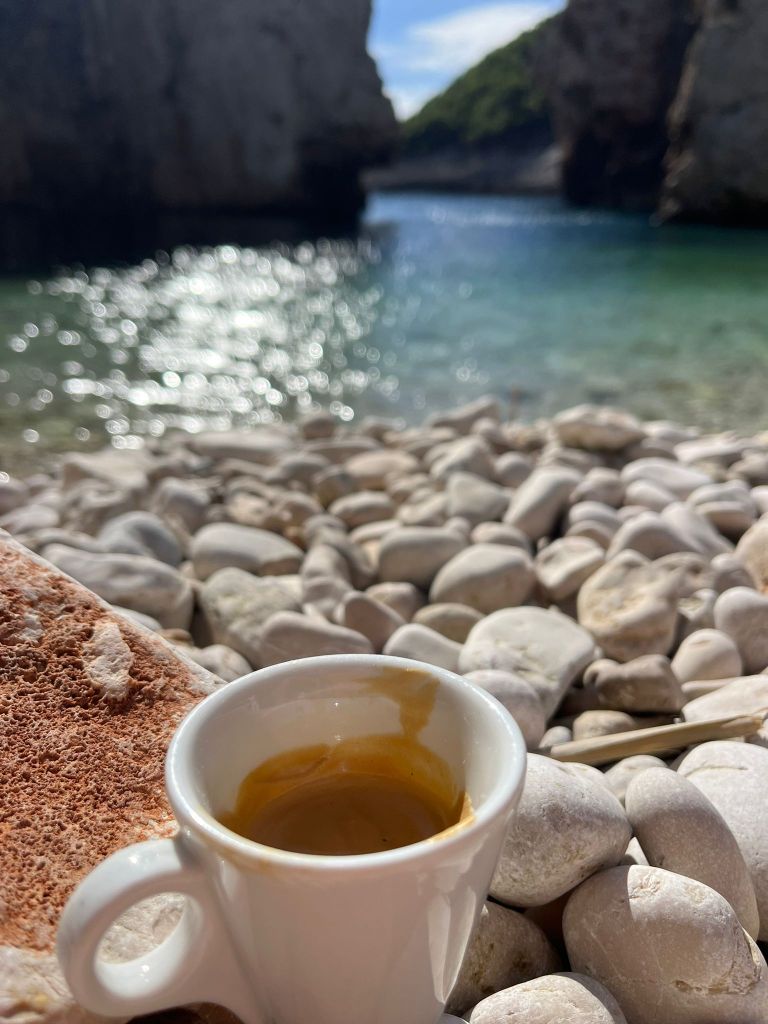
Legend says Ottoman emperor Suleiman the Magnificent banned coffee among his soldiers because they spent too much time drinking it and talking. When coffee arrived in Europe in the 16th century, first through Venice and later Vienna, it stirred controversy again. The Church branded it “devilish” because it came from the East, until the Pope tasted it and approved. Later, English wives petitioned against coffee, claiming their husbands were spending too much time gossiping in cafés. But coffee won every battle and became one of the world’s favorite drinks, with endless variations.
Because Croatia once bordered the Ottoman Empire, many cultural elements blended into local traditions, including food, language, and of course, coffee. To this day, homemade coffee is often called “Turkish coffee,” prepared in a special pot known as a ˝džezva˝ or ˝kogoma˝. It remains one of the most common ways to brew coffee in Croatian homes. If you visit a Croatian household, expect to be offered coffee immediately regardless of the time. Along with rakija (strong alcoholic drink), it’s one of the essential welcoming drinks. And if you’re the guest, it’s polite to bring a small gift, usually a bag of coffee and a pack of cookies.
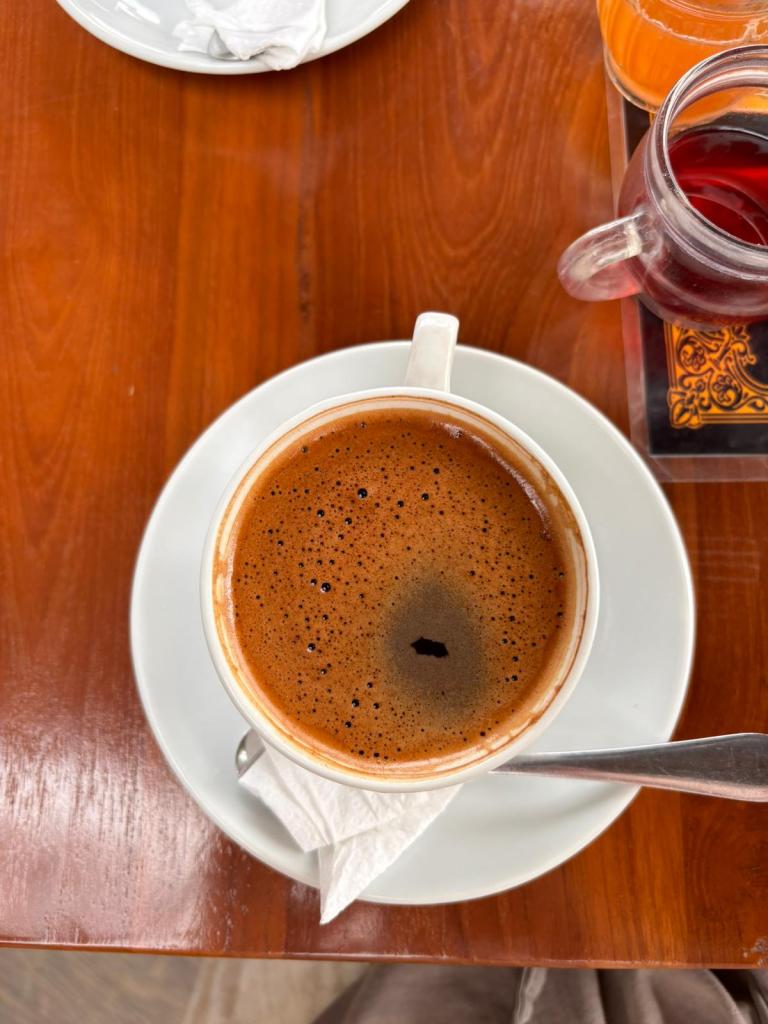
To truly blend into Croatian culture, you need to master the slow coffee ritual. A single cup can last an hour, two hours, or even longer. It’s not about the drink anymore. It’s about talking, laughing, planning, resting, or simply being together. Job interviews, friendly catch-ups, breakups, celebrations have one thing in common: they all happen over a cup of coffee.
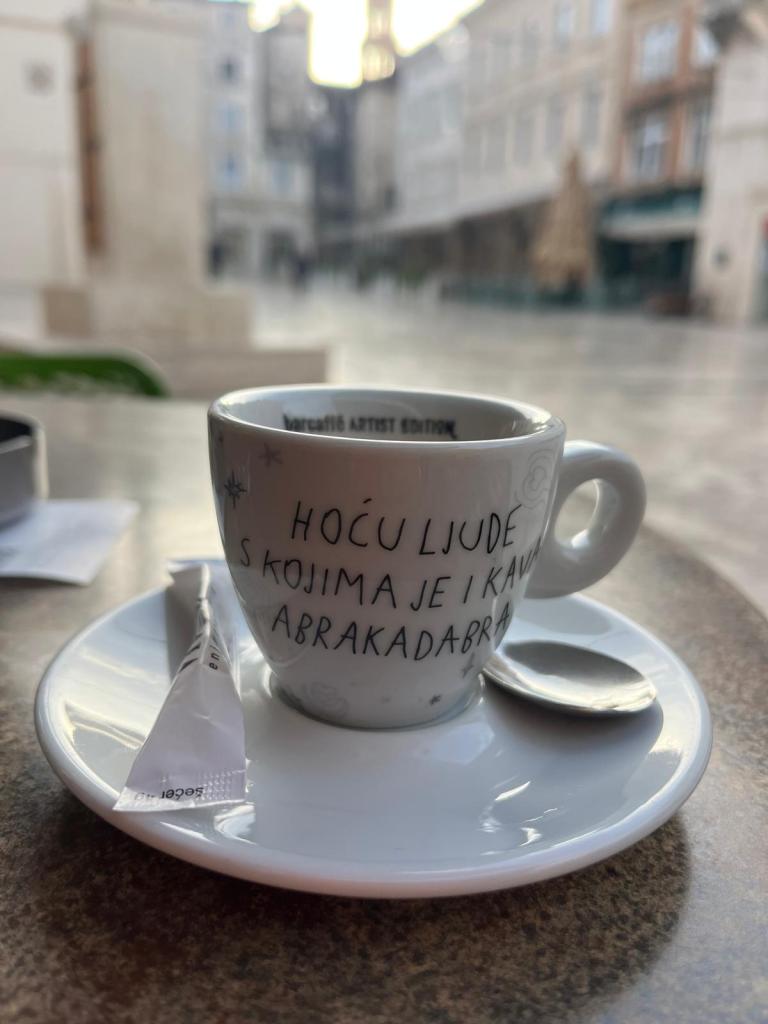
Split the bill culture doesn’t exist in Croatian cafés. Instead, coffee sessions end with a friendly argument over who gets to pay. Everyone insists. Someone eventually wins. The winner pays the bill and leaves the tip. The rest promise: “Next time, it’s on me.” No one keeps count; it all balances out. This quiet ritual shows what coffee really means here: trust, generosity, and connection. It is not about beverage. Coffee is a social glue, a pause button, and a cultural trademark. A simple cup becomes a welcome, a conversation, a tradition, and a way of life. If you want to understand Croatians, start by watching how they drink coffee. Not rushing. Not grabbing it to go. Just sitting, talking and observing the world. And if you want to experience the culture fully, just copy this process and enjoy.


 Adria Tales
Leave a comment